AI is reshaping the way students plan their future careers – here is a full guide to future careers.The Future of Career Planning with AI – A Comprehensive Guide to Future Careers.
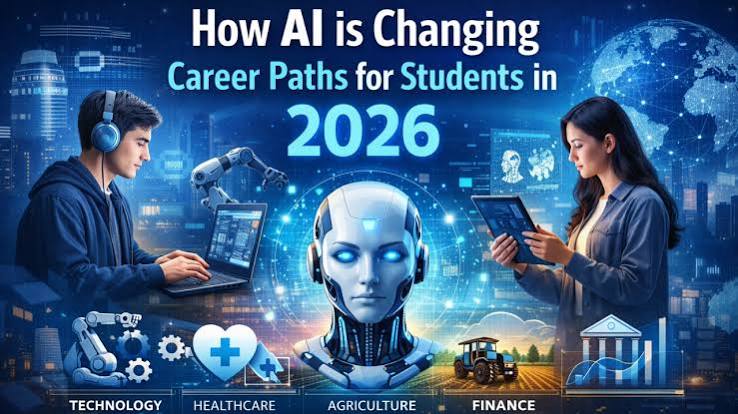
Discover how AI is transforming students’ career planning by exploring its applications, benefits, and drawbacks.Navigate students’ career planning with AI: learn about its applications, benefits, and drawbacks.
Explore the impact of Artificial Intelligence on Career Planning for students. Gain insights on the effect of AI on employment, future job prospects, key skills, and being prepared for the future.
Focus Keyword: How AI Is Changing Career Planning of Students
Table of Contents
how ai is changing-career-planning-of-students
Understand how AI is reshaping career planning for students and learn about potential opportunities in your future career.
Introduction
Artificial Intelligence (AI) is not futuristic anymore, it is a reality today. AI is revolutionizing learning, work, and career, ranging from virtual assistants and recommendation systems to self-driving technology and intelligent chatbots. With the advent of new technology, students need to reexamine their approach to the future job market.
Traditionally, career planning has been seen in terms of choosing a degree, acquiring skills and techniques, and looking for work when the student graduates. But the fast pace of AI development is transforming the way this is done. In today’s world, students must be knowledgeable about new and emerging technologies, be able to adapt to change, and be lifelong learners to be competitive. AI isn’t going to replace every job, but it is changing the way every industry operates, forming new jobs, and altering the preferred skills of the employers.
The guide outlines how AI is transforming career planning for students, the opportunities and challenges it offers, and some of the steps students can take to prepare for a successful career in an AI future.
What is Artificial Intelligence (AI)?
Artificial Intelligence (AI) is computer systems that can emulate human intelligence. These tasks are as follows: learning from data, understanding language, recognizing images, solving problems, predicting, and generating content.
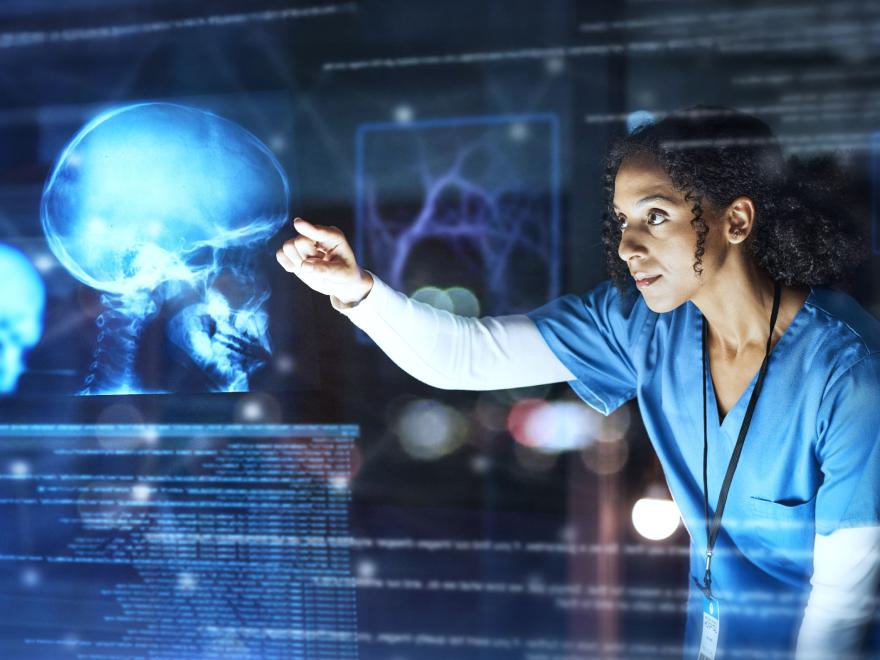
In the field of education, AI is being utilized in various ways such as grading assignments, creating personalized learning plans, and administering tests.In healthcare, AI could assist in patient care by analyzing medical records for patterns and trends to aid in diagnosis and treatment.In the banking sector, AI can be helpful in automating repetitive tasks, like processing customer transactions and identifying fraudulent activity. AI is now an integral part of business life, and every student entering the world of work will likely interact with AI systems in his or her career.
The reasons for the change of Career Planning.
Career Planning is not just about picking a career! It’s about being ready for the fast-changing world of technology and the changing nature of jobs.
Employers are now looking for graduates who can:
Work effectively with AI tools.
Solve complex problems.
Apply a critical and creative thinking approach.
Get up and running with new technologies in a short amount of time.
Make adjustments to meet the needs of the workplace.
Work concurrently with humans and smart systems.
Students who develop these skills will be more successful in the future career.
There are also benefits to AI for students’ career planning.AI also offers several positive advantages to students’ career planning.
- Better Career Guidance
AI-driven job sites can analyze a student’s interests, academic achievement, and abilities to suggest appropriate career paths. The customized suggestions support students in reflecting on their learning and career paths.
- Personalized Learning
AI can help with customizing education by tailoring learning to each student’s specific needs. Students are provided with individualized study plans, timely feedback and extra resources adapted to their strengths and needs. This enhances learning efficiency and enables students to acquire industry-relevant skills.
- Improved Skill Development
Students are able to use AI tools to practice coding, enhance writing, learn foreign languages, solve maths problems, and research information. AI serves as a learning assistant, facilitating ongoing skill acquisition.
- Personalized Learning Plans and Pathways
Students have access to online courses, virtual tutors, AI tutors, and learning platforms from all over the world. This provides a chance to acquire high-level competencies wherever you go.
- Increased Productivity
The AI automates repetitive tasks like taking notes, summarizing information, structuring study times and making practice quizzes. This enables students to focus more on conceptual and hands-on aspects.
People have to engage in tasks that they are supposed to understand.
There are many advantages of AI, but students should also know of the drawbacks.
Job Automation
Some tasks are automated to a certain extent in the basic ones. As AI capabilities improve, some roles that involve repetitive tasks with administrative duties, data entry, and customer service can become repetitive.
But, automation typically alters roles not jobs.
Constant Skill Updates
Technology evolves rapidly. Students are no longer able to depend on learning just in their university. In today’s world, a person’s success in his or her career demands that he or she be able to learn throughout life.
It is essential that professionals continually update their skills via certification, workshops, online training and hands-on experience.
Increased Competition
As AI boosts everyone’s productivity, companies will likely expect improved work done quicker. Building the ability of students to use AI effectively will give them a competitive edge.
Ethical Challenges
Additionally, students should also be made responsible for the use of AI. Issues requiring ethical choices and digital responsibility include plagiarism, misinformation, copyright, privacy and bias.
Jobs AI May Change
Routine tasks in jobs are likely to be automated by AI, not necessarily replace all workers. The roles that are most impacted are:
Data entry clerks
Customer service team members at the most basic level of the organization.
Telemarketing agents
Simple bookkeeping positions
Routine administrative assistants
Content Generation roles, which are considered basic.
Hand scheduling and record keeping.
The roles are evolving, and employees are increasingly likely to manage rather than perform repetitive tasks with AI tools.
The opportunities that are growing with the help of AI.
AI is creating new employment opportunities like:
Artificial Intelligence Engineer
Machine Learning Engineer
Data Scientist
Robotics Engineer
AI Researcher
AI Product Manager
Prompt Engineer
AI Consultant
Cybersecurity Specialist
Cloud Computing Engineer
Data Analyst
Automation Specialist
People who excel in these areas are likely to have good prospects for employement in the future.
Skills students need in the future for their work.
Students will need to have technical skills alongside human skills to thrive in an AI-driven environment.
Technical Skills
AI fundamentals
Python programming
Data analysis
Machine learning basics
Cloud computing
Cybersecurity awareness
Database management
Digital literacy
Human Skills
Critical thinking
Creativity
Communication
Leadership
Emotional intelligence
Teamwork
Adaptability
Problem-solving
Decision-making
Time management
These are the skills that are hard to replace with AI and are human skills.
The knowledge students ought to acquire to be ready for the future with an AI dimension.The knowledge students should have on preparing for an AI-driven future.
Students need to understand these basic concept of artifical intelligence for career in 2027
Have an understanding of basic concepts of Artificial Intelligence.
Become very proficient in the use of the computer and other technology.
Program using programming languages (Python).
Responsible use of AI tools for enhancing learning.
Create real-world projects and professional portfolio.
Gain work experience and internships.
Earn industry-recognized certifications.
Improve communication and team working skills.
Keep up to date with new technologies.
Be committed to lifelong learning and continuous improvement.
Career Planning for a New Era
Employers will value candidates who can combine technical skills with creative, emotional intelligence and problem-solving skills for tomorrow’s workplace. AI isn’t taking the place of human talent, it’s a powerful partner.
Flexible, innovative, and lifelong learners will be better prepared for changing employment opportunities and new opportunities.
It is more important for students to think about how AI can contribute to improving them at what they do rather than “Will AI take my job?” This attitude will enable them to remain competitive in a world that has become more technology-based.
Conclusion
AI is transforming the job landscape in numerous ways, including the skills that employers are seeking, new career opportunities, and automation of repetitive tasks. Traditional positions will change, but there will be a whole host of new careers in technology, health sciences, finance, and education, among others, as well. Once students are AI literate and gain technical skills and uniquely human qualities from creativity, communication and critical thinking, they will be ready for success. In the future workforce, students will be equipped with a positive mindset towards lifelong learning and the use of AI as a tool, not a threat, ensuring their success in the future.
https://procareertip.com/wp-admin/post.php?post=663&action=edit
Frequently Asked Questions (FAQs):
What are the effects of AI on career planning for students?
AI can provide students with career insights based on data to explore career paths, learn about skills in demand, customize learning, and prepare for future careers.
How will AI impact the job market in the future?
Not everything can be automated by AI: While there are a lot of repetitive tasks that AI can perform, tasks involving creativity, leadership, interaction with people and complex decision making will still be human dependable.
What are the most needed skills in the AI era?
The students should know about Digital Literacy, Basics of Artificial Intelligence, Programming, Data Analysis, Critical Thinking, Creativity, Communication, Team work and adaptability.
What are the jobs that are expanding due to AI?
Popular and expanding careers include AI engineering, machine learning, data science, cybersecurity, robotics, cloud computing, AI consulting and automation engineering.
What are the steps for preparing students for the jobs of the future?
Peoples need to have a grounding in the basics of AI, to be able to build practical applications, to gain experience in the real world, to find appropriate qualifications for their chosen field and to keep their skills up to date with the latest technology as much as possible.